Description
Orlando Gibbons was among the most versatile English composers of his generation, equally at home in keyboard music, consort works for viols, verse anthems, and the flourishing world of the English madrigal. The silver swan, published in 1612, is his most famous contribution to the genre, again inspired by the ancient legend that swans sing only at the moment of death. The text is generally regarded as ‘anonymous’, but may have been Gibbons’s own and has also been attributed to his patron, Sir Christopher Hatton. Whatever its origin, the poem is perfectly matched to Gibbons’s spare, luminous style: the music unfolds with quiet restraint, its clarity lending the swan’s final utterance an air of inevitability. The closing line—‘More geese than swans now live, more fools than wise’—has long invited interpretation, whether as a wistful comment on the waning of the English madrigal or, more broadly, as a reflection on the passing of the late Elizabethan musical world. In its brevity and poise, The silver swan feels like a farewell not only to the bird, but to an entire artistic moment.
© Owain Park 2026
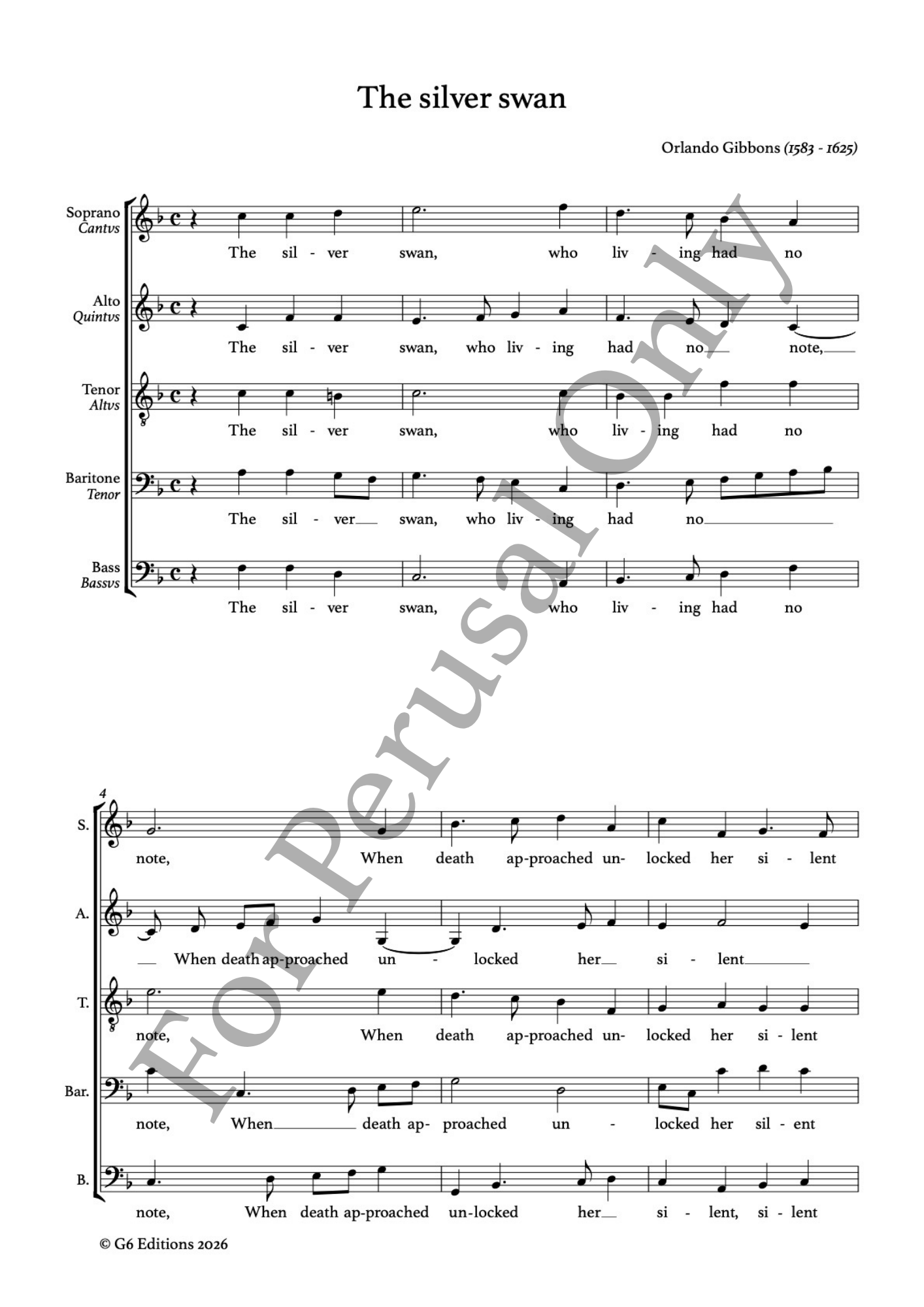
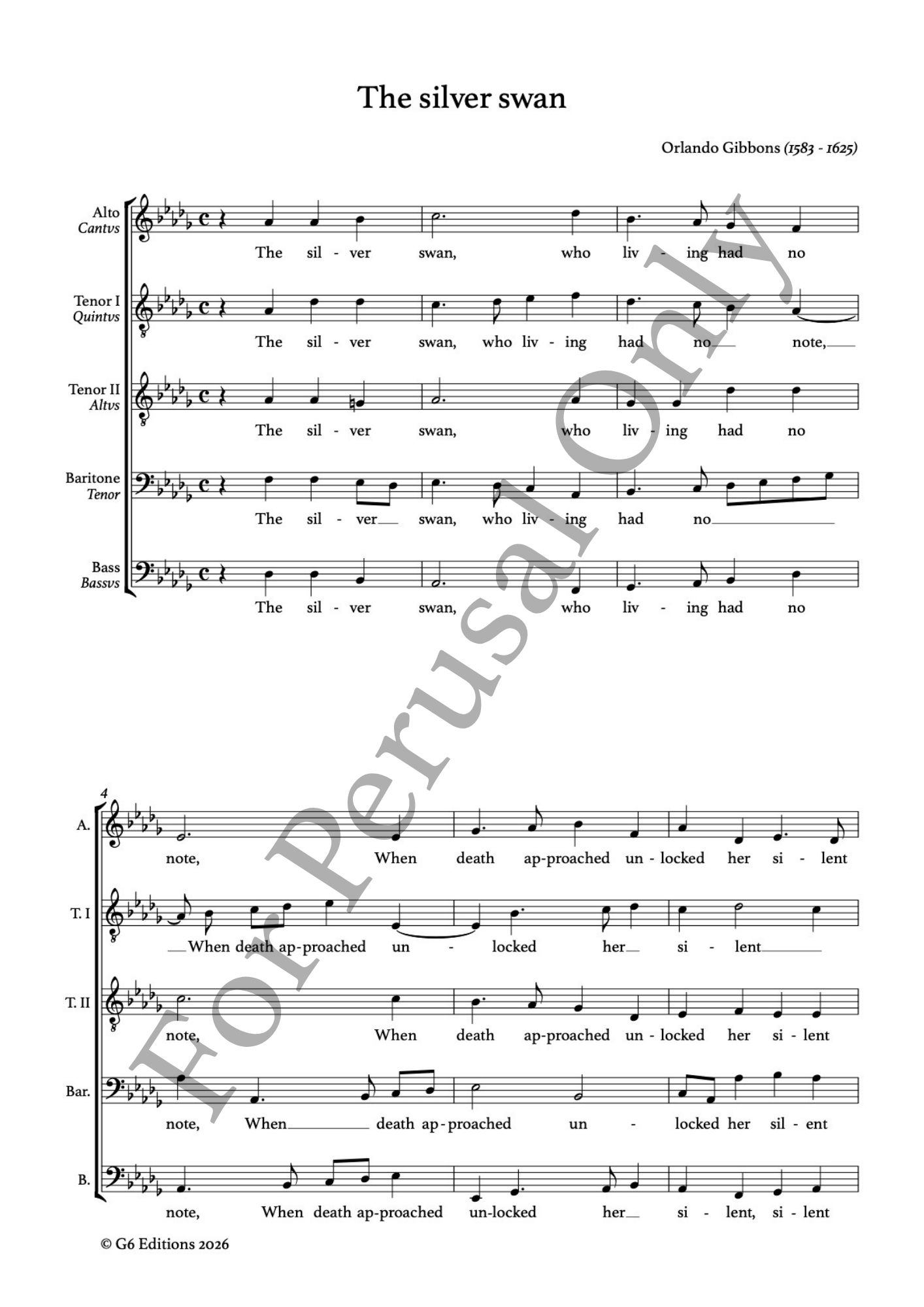
The silver swan, who living had no note,
When death approached unlocked her silent throat.
Leaning her breast against the reedy shore,
Thus sung her first and last and sung no more:
“Farewell all joys, O death come close mine eyes,
More geese than swans now live, more fools than wise.”
Anonymous